If you’ve ever looked at your smartwatch and noticed an “ECG” or “heart rhythm” feature, you’ve probably wondered: is this actually medical-grade, or is it a wellness gimmick? ECG stands for electrocardiogram — it’s the same test a cardiologist orders to examine your heart’s electrical activity and catch abnormal rhythms like atrial fibrillation (AFib), a condition where the upper chambers of the heart quiver irregularly instead of beating in a coordinated way. According to the American Heart Association’s AFib patient resources, AFib affects roughly 6 to 12 million Americans, and catching it early genuinely matters. The four brands most buyers compare — Apple, Samsung, Fitbit (now part of Google), and Withings — all advertise ECG on their flagship devices. But the quality of those readings, how a cardiologist interprets them, and what you’ll spend over time vary more than the marketing suggests. This article maps out exactly where they differ so you can make a clear decision based on your actual monitoring goal.
What “ECG on a Smartwatch” Actually Means — and Where the Limits Are
Before comparing brands, it helps to be precise about what a smartwatch ECG is and what it isn’t.
A clinical ECG — the kind performed in a hospital — uses 12 leads (12 sensor positions across your chest, arms, and legs) to capture a full three-dimensional picture of your heart’s electrical activity. A smartwatch ECG is a single-lead ECG: one electrical circuit formed between the sensor on the watch back and the finger you press against the crown or bezel. This is the same configuration as a Lead I tracing on a clinical 12-lead machine. It’s genuinely useful for detecting AFib and some other rhythm problems, but it cannot diagnose a heart attack, confirm or rule out most structural heart disease, or replace a full diagnostic workup. The Mayo Clinic’s electrocardiogram overview reinforces this point: consumer ECG devices are screening and trend-awareness tools, not diagnostic substitutes for a full clinical evaluation.
The FDA’s 510(k) clearance process is the key trust signal here. A cleared smartwatch ECG app has demonstrated to the FDA that it can accurately identify AFib versus normal sinus rhythm under defined conditions. “Cleared” does not mean “equivalent to a clinical ECG” — it means the specific function claimed (AFib detection in adults without known AFib) has been validated. The FDA’s 510(k) premarket notification database and De Novo classification program both document these authorizations. Every brand covered here carries some form of FDA clearance, but the scope and the output format vary, and that variation determines whether your cardiologist can do anything actionable with the file you hand them.
The Four Contenders: Specs, Clearance, and Clinical Usability
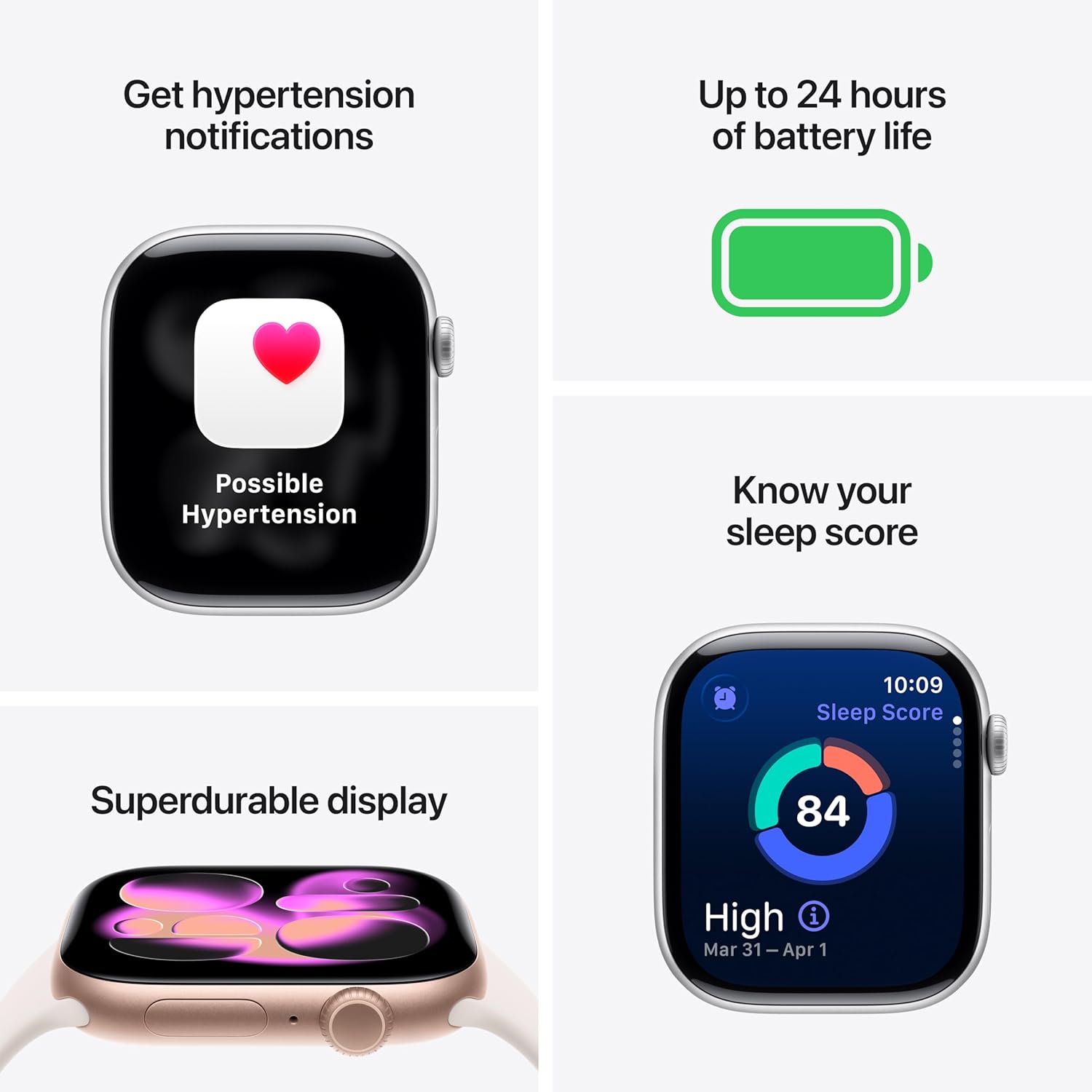
Apple Watch Series 9 / Ultra 2
Apple’s ECG app has carried FDA 510(k) clearance since Series 4 in 2018, making it the most field-tested wrist ECG on the market from a regulatory-history standpoint. The hardware uses a single-lead electrical heart sensor embedded in the Digital Crown and the sapphire crystal back. A 30-second recording generates a PDF displaying the Lead I rhythm strip, heart rate, and a software classification of “Sinus Rhythm,” “AFib,” “Low/High Heart Rate,” or “Inconclusive.”
Clinical usability: Cardiologists and electrophysiologists increasingly accept Apple Watch ECG PDFs as a supplementary data point in follow-up visits. Wareable’s best ECG smartwatches roundup aggregates clinical commentary noting that the PDF format is standardized enough that physicians can read the rhythm strip visually — it’s not just a number, it’s a waveform. The single-lead trace limits interpretation to rhythm assessment; P-wave morphology can be identified in favorable recordings, but ST-segment or QRS analysis is unreliable at a single lead.
Total cost of ownership: The Apple Watch Series 9 retails around $399 at launch; the Ultra 2 carries an $799 price point. The ECG app requires no subscription — it’s included with watchOS. Third-party bands run as low as $10–$15. The Health app ecosystem handles longitudinal data storage, though exporting PDFs requires manual effort.
The tradeoff to name explicitly: Apple’s ecosystem lock is real. The ECG feature is iPhone-only. If your household runs Android, the watch hardware pairs, but the ECG app does not activate — it’s a software-gated feature tied to iOS.
WITHINGS
$350.00
In stock on Amazon
Check price on AmazonSamsung Galaxy Watch 7 / Watch Ultra
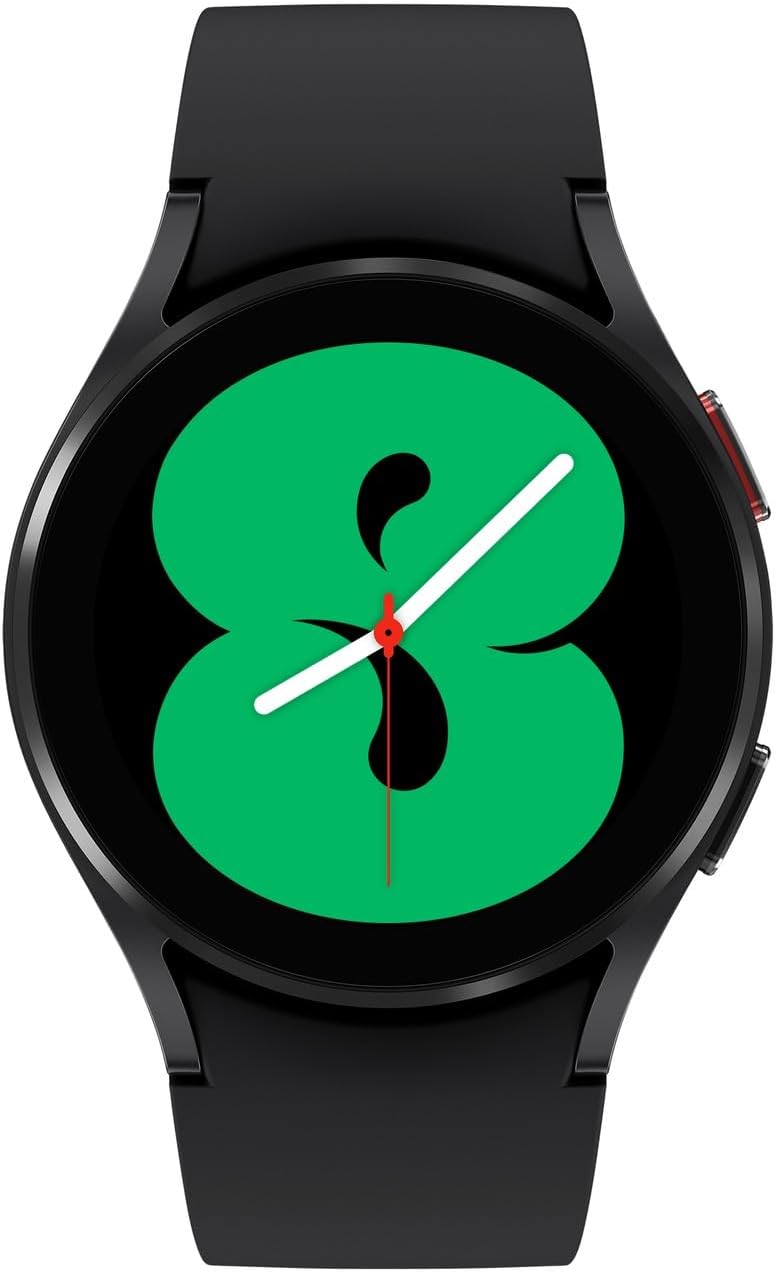
Samsung’s BioActive Sensor received FDA De Novo authorization — a pathway for novel device types, comparable in rigor to 510(k) — for AFib detection via single-lead ECG. The Galaxy Watch 7 and Watch Ultra both carry this clearance. The recording protocol mirrors Apple’s: 30 seconds, finger on the top bezel, software classification output.
Where Samsung differentiates: The Galaxy Watch 7 pairs its ECG with a simultaneous blood pressure monitoring feature using pulse wave analysis. TechRadar’s Samsung Galaxy Watch 7 review notes the multi-parameter logging in Samsung Health is strong for Android users who want one app consolidating ECG snapshots, blood pressure trends, HRV, and sleep data. Passive irregular rhythm notifications run in the background, catching events the wearer wouldn’t otherwise initiate.
The PDF question: Wareable’s ECG watch roundup aggregates cardiologist feedback indicating Samsung’s ECG output is somewhat less standardized in its waveform display than Apple’s. The classification result is clear, but physicians accustomed to Apple’s PDF layout note that Samsung’s format requires a short acclimation period. This is not a disqualifier — it’s a workflow friction point worth knowing.
Total cost of ownership: Galaxy Watch 7 retails around $299; Watch Ultra around $649 at launch. Samsung Health is subscription-free for core features. Standard 20mm lug width keeps third-party band costs low.
The tradeoff: Samsung’s ECG is Android-gated. iPhone users can pair a Galaxy Watch for fitness tracking, but ECG functionality requires a Samsung-ecosystem Android phone.
WITHINGS
$333.99
In stock on Amazon
Check price on AmazonFitbit Sense 2
Fitbit’s ECG app received FDA 510(k) clearance with the original Sense, and the Sense 2 carries that clearance forward. The hardware and protocol are consistent with the category: single-lead, 30-second recording, finger contact with the stainless steel frame, software classification output.
The honest assessment: Across Wareable’s ECG smartwatch roundup and PCMag’s coverage of the Fitbit Sense line, the Sense 2 ECG is functionally adequate for AFib screening in a consumer context but lags behind Apple and Samsung in two practical areas. First, the output report is formatted for consumer readability rather than clinical use — it presents results in plain language with limited waveform detail, which reduces its utility when a physician wants to review the actual rhythm strip. Second, the Fitbit Premium subscription ($9.99/month or $79.99/year) is required to unlock longitudinal health trend analysis and full health report exports, adding $80–$120 annually to cost of ownership that the Apple and Samsung ecosystems do not impose for equivalent baseline features.
Where Fitbit earns its place: Price. The Sense 2 retails around $249 and is regularly discounted to $179–$199. For a fitness-focused adult who wants AFib screening capability at the lowest cleared-device price point in the wrist ECG category, this is the entry point to evaluate.
The tradeoff: If you’re managing documented arrhythmia and your cardiologist wants to review rhythm data, Fitbit’s output format creates more friction than Apple’s. It’s a wellness-first, clinical-second device in practice, even if the FDA clearance language is comparable at the category level.
Samsung
$56.66
In stock on Amazon
Check price on AmazonWithings ScanWatch 2
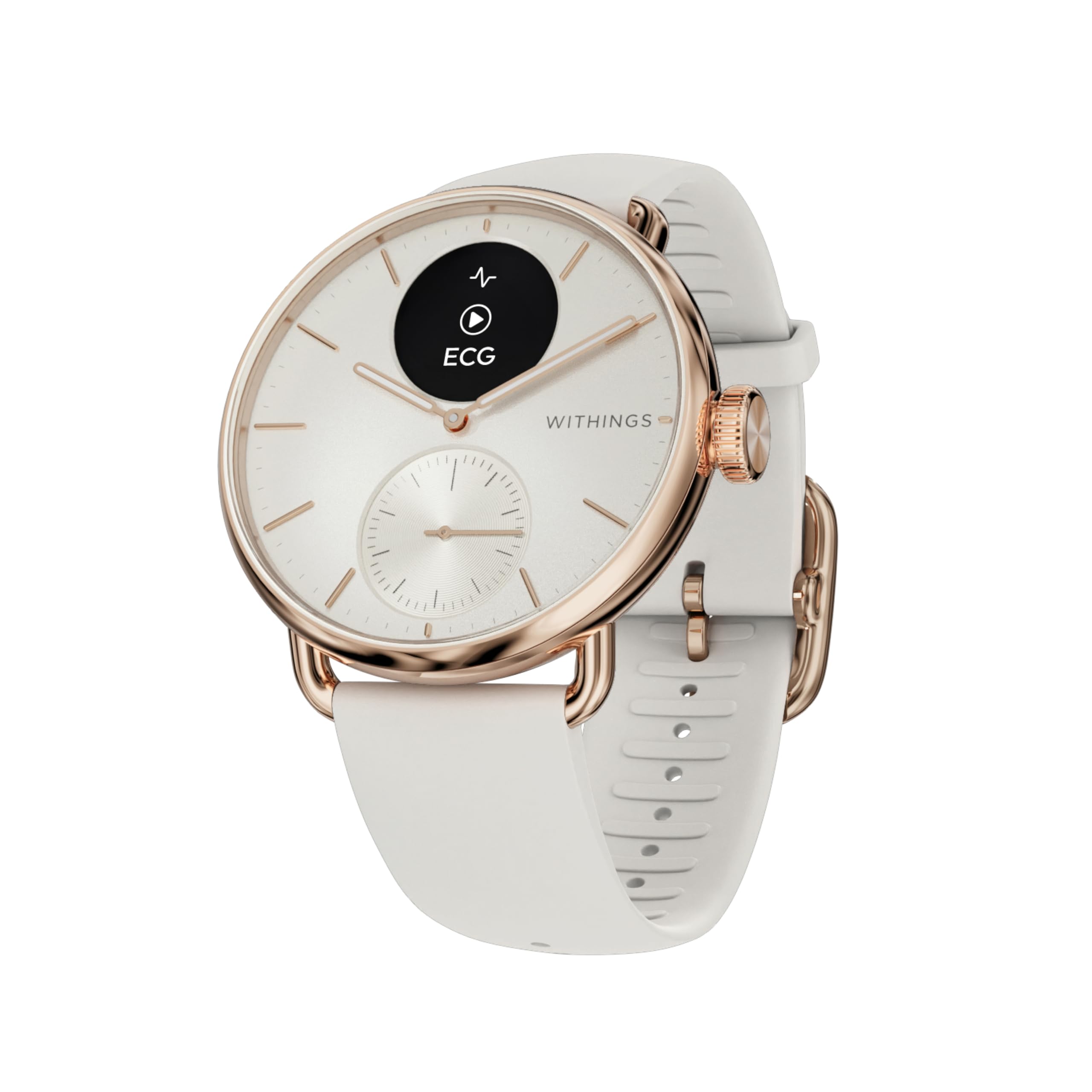
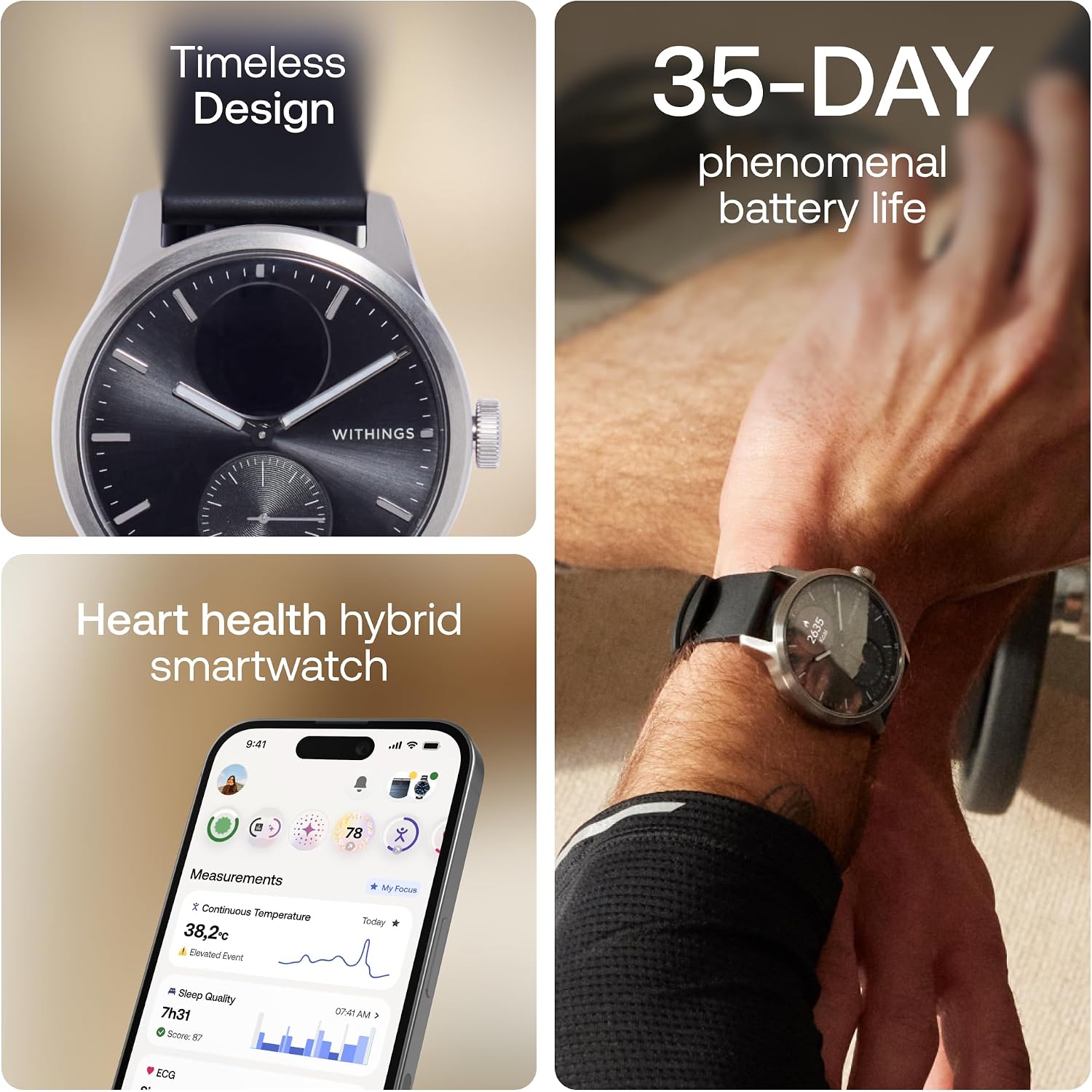
Withings takes a different design philosophy entirely — the ScanWatch 2 is built to look like a traditional analog watch, with a small digital window for data display. Its ECG capability received FDA 510(k) clearance and European CE medical device certification, the EU’s regulatory equivalent of FDA clearance for regulated health devices. This dual-market regulatory standing is a genuine differentiator: Apple and Samsung hold clearance in select international regions, but Withings’ CE marking alongside FDA clearance covers a broader geographic use case.
The clinical usability argument for Withings: Wareable’s ECG watch roundup notes that the ScanWatch 2’s ECG PDF output has received positive feedback from cardiologists in European clinical settings. The waveform is presented in a standard clinical format — a clean 30-second Lead I strip readable by a trained eye without consumer-oriented overlay graphics cluttering the trace. Withings has also published device validation studies conducted in partnership with European hospital networks, available through Withings’ clinical research documentation.
The practical limitation: The ScanWatch 2 is cross-platform (iOS and Android via the Health Mate app, with no subscription required for ECG access or data export), which is a genuine differentiator over both Apple and Fitbit. However, there is no passive background AFib detection — recordings must be manually initiated. Apple and Samsung both run passive irregular rhythm notifications continuously. If a paroxysmal AFib episode occurs while you’re asleep or otherwise not actively recording, the Withings device will not catch it. That’s a meaningful gap for anyone whose monitoring protocol depends on capturing spontaneous events.
Total cost of ownership: ScanWatch 2 retails around $349–$399. No subscription is required. Battery life rated at up to 30 days substantially reduces the daily charging friction that owners of Apple and Samsung devices consistently cite as a compliance pain point — particularly relevant for older adults or anyone whose monitoring adherence depends on not thinking about charging.
WITHINGS
$333.99
In stock on Amazon
Check price on AmazonComparison at a Glance
| Device | Launch Price | ECG Clearance | Subscription Required | Waveform Clinically Readable | Passive AFib Detection | Tier |
|---|---|---|---|---|---|---|
| Apple Watch Series 9 | ~$399 | FDA 510(k) | No | Yes — widely accepted | Yes | WITHINGS — $350.00 |
| Apple Watch Ultra 2 | ~$799 | FDA 510(k) | No | Yes — widely accepted | Yes | WITHINGS — $350.00 |
| Samsung Galaxy Watch 7 | ~$299 | FDA De Novo | No | Yes — minor friction | Yes | WITHINGS — $333.99 |
| Fitbit Sense 2 | ~$249 | FDA 510(k) | Yes (~$80/yr full features) | Limited | Yes | Samsung — $56.66 |
| Withings ScanWatch 2 | ~$349 | FDA 510(k) + CE | No | Yes — strong in clinical settings | No | WITHINGS — $333.99 |
The Decision Frame: If X, Then Y
Here’s where the analysis converts to a clear decision rule:
If you’re an iPhone user managing documented AFib and your cardiologist has asked you to bring in rhythm data: The Apple Watch Series 9 or Ultra 2 is the default choice. The PDF format is the most widely accepted in clinical practice per Wareable’s aggregated cardiologist commentary, passive background monitoring catches events you wouldn’t otherwise initiate, and there’s no subscription friction. The cost premium over Fitbit is justified by clinical output quality.
If you’re an Android user who wants equivalent capability: The Samsung Galaxy Watch 7 is the direct answer. Clinical output is acceptable — not identical to Apple’s, but workable — the price is lower, and the multi-parameter Samsung Health ecosystem adds genuine value if you’re also logging blood pressure trends.
If you’re building a fitness monitoring stack and AFib screening is a secondary concern rather than your primary clinical goal: The Fitbit Sense 2 at $179–$199 on sale delivers cleared ECG functionality at a meaningful price reduction. Budget for the Premium subscription in your total cost calculation — at roughly $80/year, it narrows the price gap with Samsung meaningfully.
If you need cross-platform compatibility, want a physician-friendly output format, and can accept the absence of passive background detection: The Withings ScanWatch 2 is the most underrated option in this comparison. The 30-day battery life also changes the compliance math significantly for anyone who finds daily charging of an Apple or Samsung device unsustainable.
A firm boundary to keep in mind: If your cardiologist needs clinically actionable multi-day rhythm data — the kind used to document paroxysmal AFib for ablation planning or medication titration decisions — no smartwatch in this comparison replaces a dedicated FDA-cleared ambulatory monitor. The Mayo Clinic’s electrocardiogram overview and the American Heart Association’s AFib patient resources both emphasize that consumer ECG devices should supplement, not replace, clinical evaluation. A monitored recording reviewed by an electrophysiologist remains the diagnostic standard. Smartwatch ECG earns its place in the stack as a screening and trend-awareness tool; understand that boundary before you buy.