You already own a smartwatch, so why bother strapping a sensor across your chest? Here is the short answer: the optical sensor on a wrist-worn device shines light through your skin to estimate heart rate — a convenient but inherently noisy method. A chest strap, by contrast, reads the actual electrical signal your heart produces with each beat, the same fundamental technology used in a hospital-grade ECG. That difference becomes critical when you are tracking HRV — heart rate variability, which is the tiny fluctuation in time between consecutive heartbeats. HRV has become one of the most closely watched metrics in both athletic recovery and early cardiac health screening, and getting an accurate reading requires capturing those millisecond-level intervals precisely. In this comparison, we break down the two chest straps that serious fitness monitors keep debating: the Polar H10 (around $90–$100) and the Garmin HRM-Pro Plus (around $130–$150). If you are deciding between them today, here is what the published specs, manufacturer documentation, and aggregated owner experience actually say.
How These Two Sensors Actually Work — and Where They Differ
Both devices are electrocardiograph-style chest straps. They sit against your sternum, pick up the heart’s electrical impulse, and transmit beat-by-beat data — what engineers call R-R intervals (the gap between the peak of one heartbeat and the next) — wirelessly to a paired device. The resolution of those R-R intervals is the single most important specification for HRV accuracy.
H3: Polar H10 — Precision-First Architecture
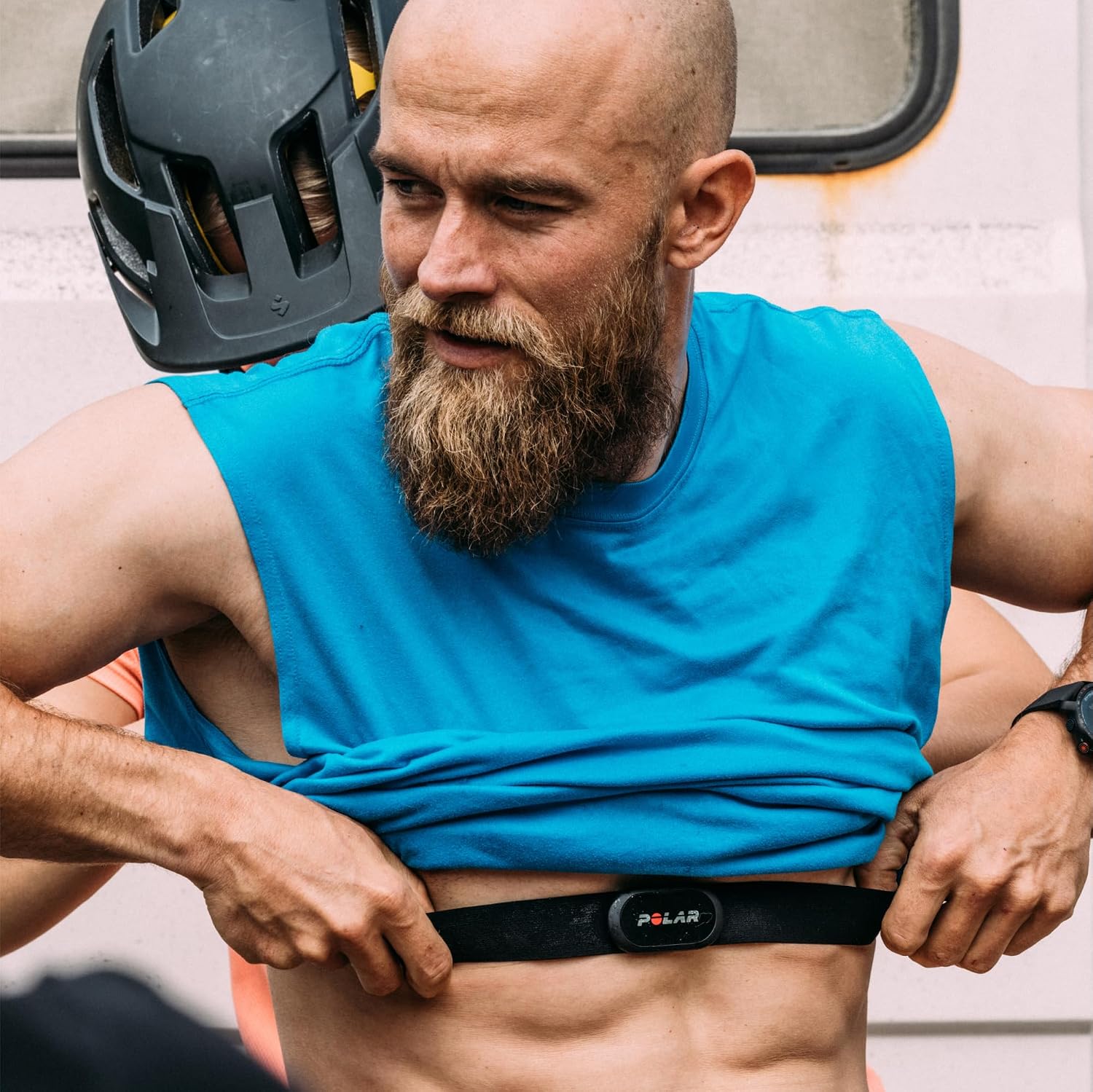
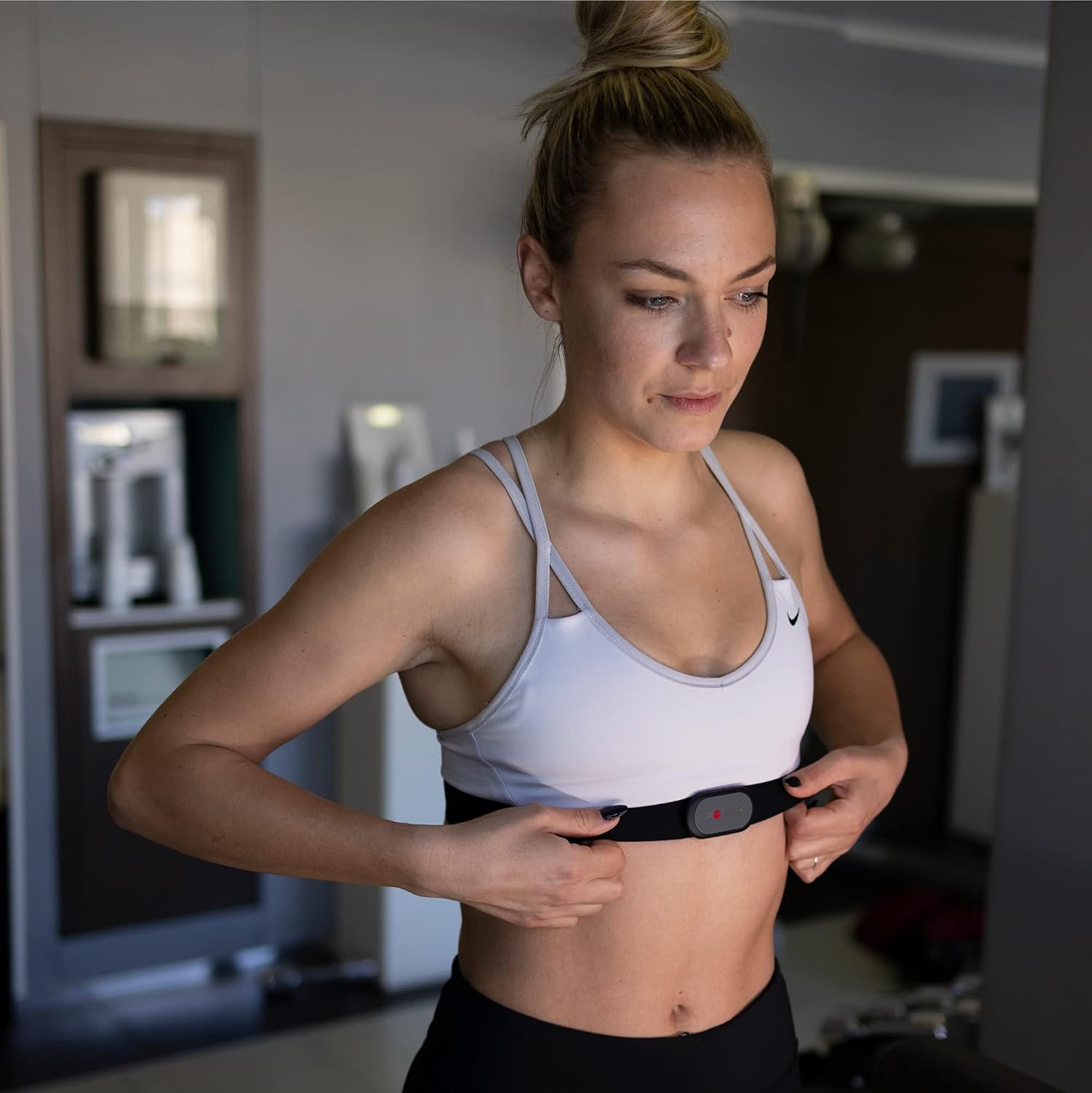
According to Polar Electro’s published H10 Heart Rate Sensor technical specifications (polar.com), the H10 transmits R-R interval data at 1 ms resolution over Bluetooth 5.0 and ANT+. It also stores a session in onboard memory (up to approximately 200 hours) when no paired device is present. The sensor uses wet electrode technology — meaning the silicone electrodes on the strap need to be moistened before use — and Polar’s documentation describes a sampling rate consistent with capturing sub-millisecond cardiac timing differences. The H10 also supports a raw ECG data stream via Polar’s open SDK, which is an unusual capability for a consumer device; it is what allows third-party HRV apps such as HRV4Training and Elite HRV to pull genuinely high-resolution interval data directly from the sensor.
Polar
$89.21
In stock on Amazon
Check price on AmazonH3: Garmin HRM-Pro Plus — Ecosystem-Integrated Training Sensor
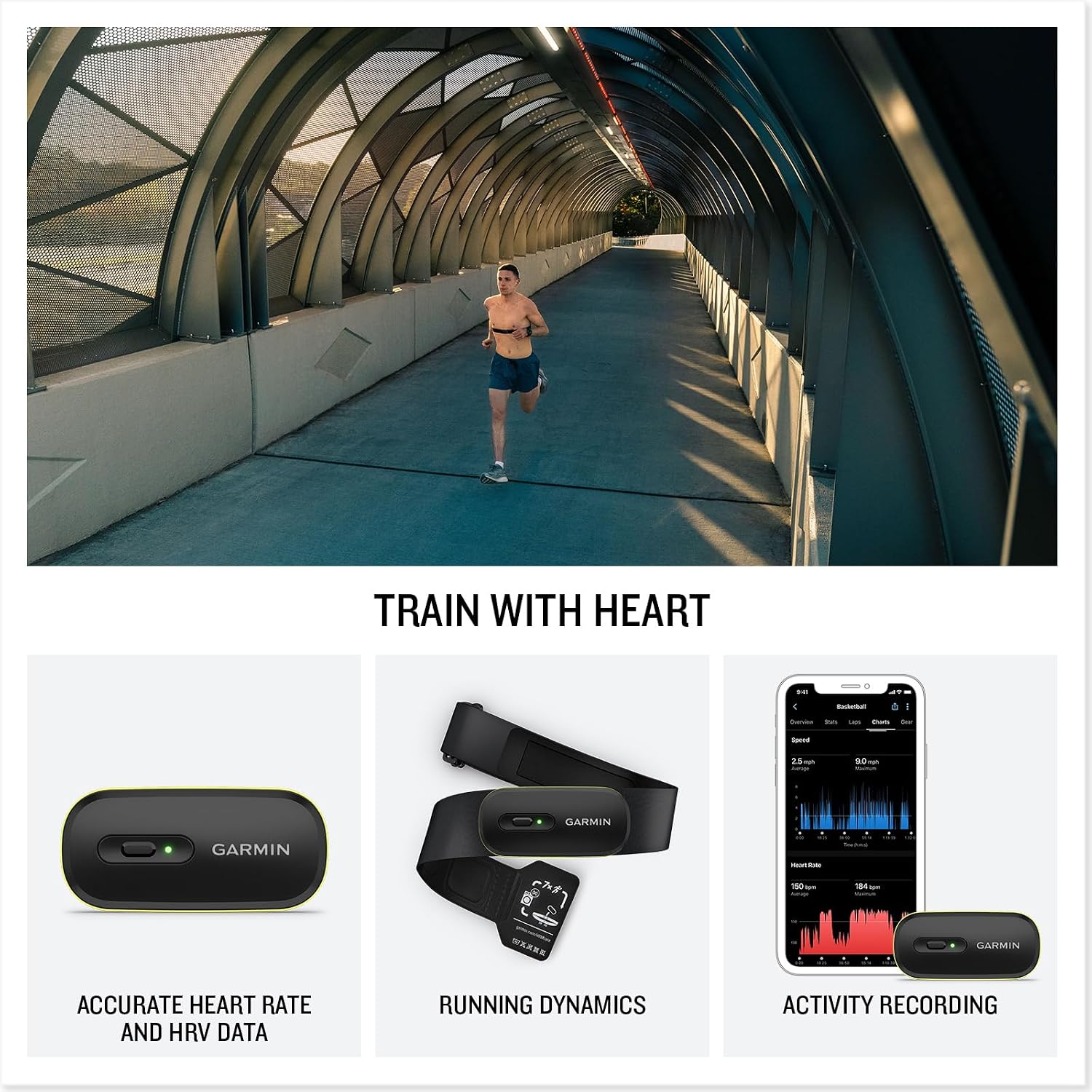
According to Garmin’s HRM-Pro Plus owner’s manual and product specifications (garmin.com), this device transmits R-R intervals and is optimized for deep integration with the Garmin ecosystem — Garmin Connect, compatible Garmin watches, and the Firstbeat Analytics physiological engine that Garmin licenses. Its standout feature over the H10 is running dynamics: it captures vertical oscillation, ground contact time, stride length, and left-right balance metrics that the H10 simply does not offer. Garmin’s documentation rates battery life at approximately one year on a CR2032 coin cell. The HRM-Pro Plus transmits over both ANT+ and Bluetooth simultaneously — a practical advantage for athletes using a Garmin watch while also streaming to a cycling computer or display.
Garmin
$169.99
In stock on Amazon
Check price on AmazonH3: The Core Tradeoff at a Glance
The distinction crystallizes quickly: the H10 is a precision HRV instrument that happens to work as a training heart-rate monitor. The HRM-Pro Plus is a Garmin-ecosystem training sensor that also captures HRV. Both are legitimate tools; they are optimized for different masters.
| Spec | Polar H10 | Garmin HRM-Pro Plus |
|---|---|---|
| R-R interval resolution | 1 ms (per Polar specifications) | Not independently published |
| Simultaneous connections | 2 (BT + ANT+) | 2 (BT + ANT+) |
| Onboard memory | Yes (~200 hr) | Yes (limited workout storage) |
| Running dynamics | No | Yes |
| Raw ECG SDK access | Yes (Polar open SDK) | No |
| Street price (May 2026) | ~$90–$100 | ~$130–$150 |
Polar
$69.90
In stock on Amazon
Check price on AmazonThe HRV Accuracy Question: What the Evidence Actually Shows
For anyone tracking HRV seriously, this is the decision-driving question, so it deserves a direct answer rather than a diplomatic shrug.
Published research consistently treats the Polar H10 as a criterion reference device — meaning independent investigators use it as the gold standard to validate other sensors. Shaffer and Ginsberg’s overview of HRV metrics and norms, published in Frontiers in Public Health (2017) and indexed at ncbi.nlm.nih.gov/pmc, relies on chest-strap ECG recording as the baseline measurement methodology. Academic studies comparing optical wrist sensors to chest-strap readings routinely identify the H10 as their benchmark comparator — a pattern visible in the methodology sections of peer-reviewed literature, not in marketing materials.
Nunan and colleagues’ systematic review and meta-analysis of short-term HRV measurement reliability, published in the Annals of Noninvasive Electrocardiology (2010) and indexed at ncbi.nlm.nih.gov, makes clear that the reliability of any HRV measurement depends heavily on the recording method and the resolution at which R-R intervals are captured. That finding is directly relevant here: it explains why sourcing interval data from a validated, high-resolution sensor like the H10 matters when precision is the goal.
The Garmin HRM-Pro Plus is not a poor HRV sensor, but Garmin’s own documentation is more circumspect about raw R-R interval resolution than Polar’s. Garmin’s HRV reporting is processed through the Firstbeat Analytics engine and surfaced as a nightly HRV Status score in Garmin Connect — a smoothed, trend-based view that is genuinely useful for day-to-day training load decisions, but is not the same as exporting raw millisecond-resolution R-R interval data to a third-party clinical or research application. Garmin’s value proposition is actionable insights within its own ecosystem; Polar’s value proposition is raw data fidelity that can flow wherever you direct it.
Wareable’s buyer guide (wareable.com, updated for the 2025–2026 cycle) and PCMag’s heart rate monitor roundup (pcmag.com, updated 2025) both place the H10 first when the question is “which chest strap for standalone HRV accuracy,” while consistently positioning the HRM-Pro as the better pick for Garmin watch owners who want integrated training dynamics.
Ecosystem Lock-In and Total Cost of Ownership
This is where the decision becomes less about hardware specs and more about your actual monitoring stack.
If your primary training device is a Garmin watch — Forerunner, Fenix, Epix, or Venu series — the HRM-Pro Plus is a seamless extension of a workflow you already own. Running dynamics, which require a compatible Garmin watch to display, unlock a meaningful layer of biomechanical coaching feedback. Garmin Connect’s long-term HRV trend view is visually coherent and actionable if you are already living inside that ecosystem. The total cost of ownership math is also favorable: the HRM-Pro Plus replaces the need for a separate running dynamics pod (sold as a standalone accessory in the $70–$100 range), so the $40–$50 price premium over the H10 largely disappears if you would otherwise purchase both.
If your primary training device is anything outside the Garmin ecosystem — an Apple Watch, a Wahoo ELEMNT, a phone running a third-party HRV application, or a clinical HRV tool — the HRM-Pro Plus’s ecosystem advantages become liabilities. Running dynamics data will not display. The Firstbeat-processed HRV score does not export in an interoperable format. You are paying more for features you cannot access.
The H10’s openness is its moat. It pairs natively with Polar Flow, but it also works with Apple Health, Wahoo, Zwift, HRV4Training, Elite HRV, and most research-grade applications via the Polar open SDK. Owners whose monitoring stacks are documented across aggregated review coverage on wareable.com and pcmag.com consistently describe the H10 as the “set it and forget it” choice for multi-platform athletes — the one sensor that works regardless of which platform they migrate to that season.
Battery and replacement costs are roughly equivalent. Both use standard coin cell batteries (the H10 uses a CR2025, typically under $2; the HRM-Pro Plus uses a CR2032, similarly priced). Both have replaceable, washable straps, and Polar’s replacement strap ecosystem includes multiple third-party options. Neither device carries a subscription fee — a notably refreshing characteristic compared to several software-dependent monitoring platforms.
Clinical Credibility: Can a Cardiologist Use This Data?
For readers managing documented cardiac concerns, one more dimension matters: can a clinician do anything with the data this device produces?
The honest answer for both devices is: not directly in a standard clinical workflow. Neither the Polar H10 nor the Garmin HRM-Pro Plus produces an FDA-cleared, physician-interpretable ECG trace. They produce heart rate variability data and R-R interval logs — valuable for fitness optimization and self-monitoring, but not a substitute for clinical ECG recordings. For that use case, devices such as the AliveCor KardiaMobile 6L occupy a fundamentally different category, producing actual single- or six-lead ECG traces suitable for clinician review. The Mayo Clinic and the American Heart Association (heart.org) have each published patient education materials emphasizing that consumer fitness monitors — including chest-strap HR sensors — serve wellness and performance purposes and are not diagnostic medical devices.
Where the H10’s 1 ms resolution R-R data does carry weight is in research and semi-clinical HRV analysis. Cardiologists and sports medicine physicians who specifically work with HRV data — for autonomic function assessment, training load monitoring in elite athletes, or post-cardiac event recovery protocols — will recognize the H10 as a credible data source. As the Nunan et al. systematic review (indexed at ncbi.nlm.nih.gov) establishes, measurement resolution and method are foundational to HRV reliability. The H10’s published 1 ms resolution and its use as a reference comparator in academic literature give it a level of face validity the HRM-Pro Plus cannot match on this axis.
The Garmin HRM-Pro Plus does not offer that same pathway, because the raw interval data is processed by the Firstbeat engine before it reaches the user.
The Decision Rule
If your goal is maximum HRV accuracy, platform flexibility, or any pathway toward sharing interval data with a clinician or researcher, the Polar H10 is the clearer choice. It is the sensor that published research treats as a reference standard, its open SDK means it will not become an orphaned device as your monitoring stack evolves, and at $90–$100 it is also the more affordable option.
If you are committed to the Garmin ecosystem, train with a compatible Garmin watch, and want running biomechanics data without carrying a separate pod, the HRM-Pro Plus earns its $130–$150 price premium by consolidating hardware and delivering an integrated, actionable HRV trend view inside Garmin Connect. Its HRV data is genuinely useful for Garmin-native training decisions — just do not expect to export raw intervals to third-party tools.
Put plainly: the H10 wins on accuracy and openness. The HRM-Pro Plus wins on Garmin-ecosystem integration and running dynamics. Those are different wins, and only you know which one you actually need.
Intent marker — Polar H10: [PRODUCT:polar-h10-chest-strap:affiliate]
Intent marker — Garmin HRM-Pro Plus: [PRODUCT:garmin-hrm-pro-plus:affiliate]