Your wrist-based smartwatch is doing something clever — and something slightly dishonest — every time it reports your heart rate. It’s shining a green light through your skin and timing the pulse of blood flow. That’s called optical PPG (photoplethysmography), and it works well enough for casual step-counting. But if you want HRV — heart rate variability, the millisecond-by-millisecond fluctuation in time between heartbeats that serious athletes and health optimizers use to gauge recovery, stress load, and nervous-system readiness — optical sensors introduce enough noise to make the numbers unreliable for training decisions. A chest strap, by contrast, sits directly over the heart and reads the actual electrical signal, the same kind of signal a standard medical ECG captures. That electrical reading is dramatically more precise for HRV. The question this guide answers: do you have to spend $100+ to get honest HRV data from a chest strap, or can a $25–$40 option actually deliver?
Short answer: yes, with clear conditions. Here’s how to navigate them.
| EDITOR'S PICK[Powr Labs Bluetooth and ANT+ He…](https://www.amazon.com/dp/B081GH9RWC?tag=greenflower20-20) | Mid-tier[COOSPO H6 Heart Rate Monitor Ch…](https://www.amazon.com/dp/B07BS6B4PD?tag=greenflower20-20) | Budget pick[GEOID HS500 Heart Rate Monitor](https://www.amazon.com/dp/B09SKZBZF8?tag=greenflower20-20) | |
|---|---|---|---|
| Protocols | Bluetooth, ANT+ | Bluetooth 4.0, ANT+ | ANT+, Bluetooth |
| Water rating | — | IP67 | IP67 |
| Battery life | — | — | 800h |
| Comfort claim | All Day Comfort | — | — |
| Compatibility | Polar, Garmin, Peloton, Wahoo | Peloton, Polar, DDP Yoga, Map My Ride, Garmin | iOS/Android APPs |
| Price | $39.99 | $26.99 | $22.99 |
| See on Amazon → | See on Amazon → | See on Amazon → |
Why the Measurement Method Is the Whole Ballgame
Before naming devices, it’s worth pinning down what “honest HRV data” actually requires — because this is where budget options either earn their place or quietly fail you.
HRV is calculated from R-R intervals — the precise time gap between consecutive heartbeat peaks in an ECG waveform. Even a 5-millisecond timing error, repeated across hundreds of beats, can distort the RMSSD and SDNN values (the two primary HRV metrics your apps display) enough to push you toward a false “recovered” or false “stressed” reading. A published validation study indexed on NCBI PubMed Central by Gillinov et al. found that consumer wrist optical devices showed mean error rates in heart rate that are individually acceptable but carry enough R-R interval jitter to undermine HRV analysis during and after exercise.
Chest straps solve the jitter problem by using electrodes — conductive pads that read electrical potential directly through your skin, like a simplified ECG lead. The signal-to-noise ratio is categorically better. The remaining variable is transmission protocol, and this is where budget straps diverge:
- ANT+ — the standard used by Garmin watches, most cycling computers, and many gym machines. Excellent for real-time heart rate display. Limited HRV logging granularity on some apps unless you pair with a dedicated ANT+ receiver on a phone.
- Bluetooth Low Energy (BLE) — what most smartphones pair with natively. High-quality BLE chest straps can transmit R-R interval data with sufficient precision for HRV apps, but only if the strap firmware actually exposes the R-R interval stream. Cheap straps sometimes advertise BLE but only send averaged heart rate, not individual beat timestamps — which makes them useless for HRV.
- Dual-band (ANT+ + BLE) — the gold standard for multi-device compatibility. Usually costs more, but some sub-$40 models now include it.
The single most important buying criterion under $40: confirm the strap transmits raw R-R intervals over BLE, not just averaged BPM. This detail is rarely highlighted in product titles and requires checking either the manufacturer’s protocol documentation or community reports from HRV app users.
The Budget Chest Strap Landscape: What $25–$40 Actually Buys You
By the Numbers
| Price tier | Typical protocol | R-R interval BLE? | Expected accuracy vs. clinical ECG |
|---|---|---|---|
| Under $25 | BLE only | Often absent | ±2–4 BPM okay; HRV unreliable |
| $25–$40 | BLE or ANT+ | Present on best picks | Within ~1–2% on RMSSD (validated straps) |
| $40–$70 | Dual-band common | Yes, most models | Consistently reliable |
| $100+ (Polar H10) | Dual-band + onboard memory | Yes | Benchmark reference |
The $25–$40 tier is genuinely viable, but the gap between the best and worst options at this price is larger than at any other tier. A strap that’s $5 cheaper may be functionally useless for HRV.
The Picks Worth Considering (and Why)
Polar H9 (~$55–$60, sometimes on sale under $50)
The Polar H9 deserves mention even though it often sits just above the $40 ceiling, because it’s the lowest-rung Polar strap with a fully validated R-R interval BLE stream. Polar’s own white paper on HRV measurement with their products details the R-R transmission protocol, and the H9 implements it. Reviewers at Wareable consistently cite it as the entry point for trustworthy HRV collection in Polar’s lineup. If you find it discounted to the high-$30s — which happens — it becomes the easy recommendation.
The H9 does not have onboard memory (the H10’s key differentiator) and is single-protocol BLE only, not dual-band ANT+. For anyone pairing with a phone-based HRV app like HRV4Training or Elite HRV, that’s fine.
Wahoo TICKR (Gen 2, ~$50–$55 retail, frequently discounted to ~$35–$45)
The TICKR Gen 2 is a dual-band strap (ANT+ and BLE simultaneously) that TechRadar’s roundup of best chest-strap monitors calls out specifically for its app compatibility breadth. The critical detail: it does transmit R-R intervals via BLE. Owners consistently report reliable pairing with HRV4Training, Garmin Connect, and the Apple Health ecosystem. It runs a soft, textile strap rather than a hard plastic pod with a snap-on band, which owners note is more comfortable during long-wear recovery monitoring (i.e., wearing it for morning HRV readings in bed, not just during workouts).
At full retail it’s above our ceiling, but PCMag’s buying guide notes it as one of the most frequently discounted fitness monitors, and $35–$40 sale pricing is common by mid-2026. Worth setting a price alert.
CooSpo H808S / HW807 (~$25–$35)
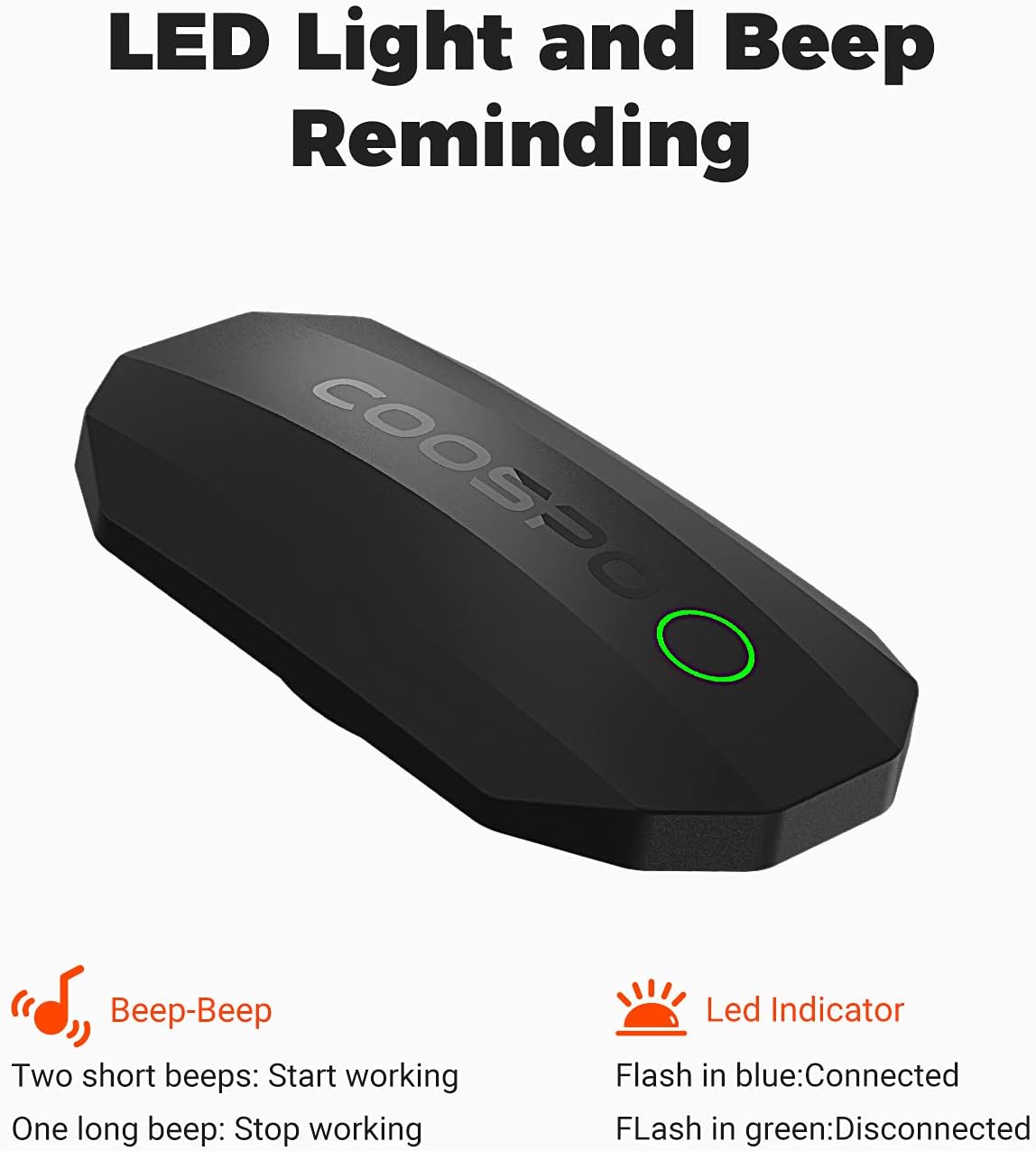
This is the genuine under-$35 answer, and it requires the most nuanced evaluation. The CooSpo H808S and its close sibling the HW807 are dual-band straps (ANT+ + BLE) at a price point that would have been unthinkable three years ago. Published specs confirm R-R interval data in the BLE stream. Across aggregated owner reviews on fitness and HRV-focused communities, the consensus pattern is consistent: the R-R data is clean during aerobic-intensity steady-state exercise and during resting morning reads. Where owners note degraded accuracy is during high-intensity intervals and strength training — contact loss as breathing deepens, sweat disrupting electrode contact at extreme exertion.
For the use case most relevant to this audience — morning HRV check, Zone 2 training, recovery-day logging — the CooSpo straps perform meaningfully above their price. For competitive racing or HIIT sessions where you need real-time beat-by-beat accuracy under physical stress, the degradation is a real tradeoff to name.
The pod is small and light; the strap is reasonably soft. Electrode gel or moisture is still recommended (as with any chest strap) — plain water applied to the electrodes before wearing helps significantly with initial signal acquisition.
Our analytical take: The CooSpo H808S is the most defensible sub-$35 recommendation for HRV collection in low-to-moderate intensity contexts. It is not a Polar H10 substitute, but for its price it is not pretending to be.
Magene H64 (~$30–$40)
The Magene H64 has gained traction in cycling communities and appears in TechRadar’s extended coverage of budget-tier ANT+ options. It’s a dual-band strap with a reported BLE R-R interval stream and a notably slim pod. Owners in endurance-sport forums report clean data during cycling and running. It’s less well-known than CooSpo in North American markets, and third-party app compatibility reports are somewhat thinner — it pairs reliably with Wahoo, Garmin, and Zwift for heart rate; HRV app compatibility is owner-confirmed but less exhaustively documented than the CooSpo.
If your priority is cycling-computer compatibility (Wahoo ELEMNT, Garmin Edge) for real-time display with a secondary HRV use case, the Magene H64 is worth considering. If HRV collection is your primary goal, the CooSpo has more documented cross-app validation.
The Non-Negotiable Checklist Before You Buy
Given how much variation exists within this price tier, here’s the due-diligence frame:
-
Confirm R-R interval BLE transmission. Check the manufacturer’s protocol page or search “[strap name] + HRV4Training” to find community confirmation. If no one’s confirmed it works in an HRV app, treat it as unconfirmed.
-
Check which HRV apps you’re targeting. HRV4Training, Elite HRV, and the Garmin HRV Status feature all have specific strap compatibility lists. The American Heart Association’s heart.org resources on HRV note that measurement consistency across sessions depends more on device consistency than on the specific device — meaning once you pick a compatible strap, stick with it for longitudinal data.
-
Factor in strap replacement cost. The electrode fabric wears out. Budget straps typically use proprietary snap connectors. CooSpo and Magene replacement straps run $8–$15. Wahoo TICKR replacement straps are ~$15–$20. This matters if you train daily — plan for annual replacement.
-
Know the use-case boundary. Sub-$40 straps are calibrated for the market, not the lab. NCBI-indexed validation research on consumer chest straps (including Gillinov et al. and subsequent studies) consistently shows that even budget straps perform within acceptable HRV accuracy ranges during steady-state activity — but high-intensity motion artifacts are real. If you’re logging HRV for clinical communication with a cardiologist, step up to a Polar H10 or an FDA-cleared ECG device like the AliveCor KardiaMobile 6L. Budget HRV data is for personal optimization decisions, not medical documentation.
The Decision Rule
If this is your first HRV chest strap and your use case is morning resting HRV + Zone 2 training: buy the CooSpo H808S at ~$25–$30. Confirm your HRV app of choice on their compatibility list. Wet the electrodes before every session. You’ll get honest data.
If you train at high intensity regularly and need HRV reliability across the full effort spectrum, the Wahoo TICKR when discounted to ~$35–$40 is the right call — the build quality and signal consistency under exertion are meaningfully better, per owner reporting patterns, and the dual-band protocol gives you longevity as your device stack evolves.
If you keep watching prices and the Polar H9 dips to the high-$30s, it becomes the clear winner in this tier — the brand’s HRV validation record is the longest and most documented in the consumer space, full stop.
What none of these straps are: a substitute for a clinical-grade ECG if you have documented arrhythmia or have been directed by a physician to monitor your cardiac rhythm. For that use case, the measurement method shifts from HRV-focused R-R analysis to actual waveform capture — and the device category shifts with it. But for fitness-driven HRV optimization on a real-world budget, the sub-$40 tier has genuinely matured. You don’t have to spend $100 to get numbers you can trust.