You’ve probably heard the term HRV thrown around in fitness circles lately, and for good reason. Heart rate variability — the subtle, millisecond-level variation in time between each heartbeat — has become one of the most useful signals for gauging recovery, stress load, and overall cardiovascular readiness. A high HRV generally suggests your nervous system is relaxed and recovered; a suppressed HRV often flags accumulated fatigue or physiological stress before you consciously feel it. Mayo Clinic’s overview of heart rate variability describes it as “a window into the autonomic nervous system,” which regulates the body’s fight-or-flight and rest-and-digest responses. The catch: to get actionable HRV data — numbers you can actually train by — you need a device that measures it consistently, surfaces it in a way that makes sense, and doesn’t bury the insight behind a pay wall or a watered-down wellness score.
That’s exactly what this comparison is about. The Garmin Vívoactive 5 (street price approximately $250) and the Fitbit Charge 6 (approximately $160) sit in adjacent price tiers and both advertise HRV tracking prominently. But underneath the marketing, they make very different architectural choices about how they collect HRV, when they report it, and — critically — what you can actually do with the output. If you’re optimizing training load, managing documented cardiac history, or simply trying to build a monitoring stack that gives you numbers a sports physician or cardiologist can engage with, the distinction matters a great deal.
| EDITOR'S PICKGarmin Vívoactive 5 | Mid-tier[Garmin vívosmart® 5](https://www.amazon.com/dp/B0D79FQWJJ?tag=greenflower20-20) | Budget pick[SAMSUNG Galaxy FIT 3 [2024] 1.6…](https://www.amazon.com/dp/B0CZQYCXFW?tag=greenflower20-20) | |
|---|---|---|---|
| Display type | AMOLED | — | AMOLED |
| Battery life | Up to 11 days | — | 14 days |
| GPS built-in | ✓ | — | — |
| Watch faces | — | — | 100+ |
| Exercise modes | — | — | 100+ |
| Price | $189.99 | $149.99 | $41.99 |
| See on Amazon → | See on Amazon → | See on Amazon → |
How Each Device Measures HRV — and Why the Method Is the Story
Both the Vívoactive 5 and the Charge 6 use optical photoplethysmography (PPG) — green LEDs that detect blood volume changes at the wrist — as their primary heart rate sensing technology. It’s worth being direct about what that means: wrist optical PPG is not the same as a chest-strap electrical signal (like the Polar H10), and neither is a clinical single-lead ECG. Wareable’s explainer on HRV tracking in wearables notes that PPG-derived HRV is “inherently noisier than electrical measurement,” especially during movement, and is most reliable during sleep or stationary overnight sessions. That’s a baseline limitation both devices share.
Where they diverge is in when they capture and how they process that signal.
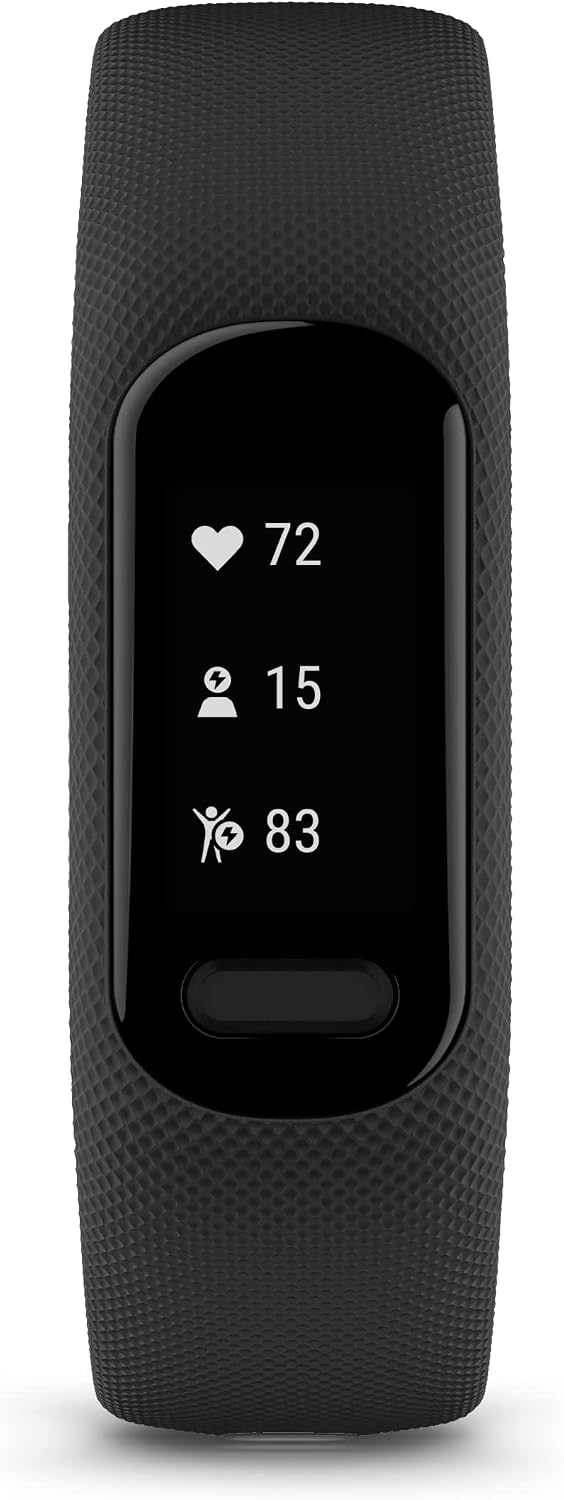
Garmin Vívoactive 5: Raw Milliseconds, No Subscription Required
Garmin
$149.99
In stock on Amazon
Check price on AmazonGarmin’s overnight HRV tracking computes an HRV Status metric — a five-day rolling average of your nighttime HRV readings expressed in milliseconds (ms). According to Garmin’s published Vívoactive 5 product specification sheet and Garmin Connect app documentation, the device captures HRV data continuously throughout sleep and computes the average in the background. The resulting number appears in your Garmin Connect app each morning as a concrete ms value alongside a personal baseline range. Critically, Garmin shows you the raw ms figure — not just a color-coded emoji or a generic “good / fair / poor” label. Full HRV history and trend graphs are available in Garmin Connect at no additional cost; the app itself is free. PCMag’s Garmin Vívoactive 5 review specifically highlights that “Garmin Connect’s depth of free health data is unmatched in this price tier,” underscoring that what Garmin offers without a subscription goes substantially deeper than most competitors.
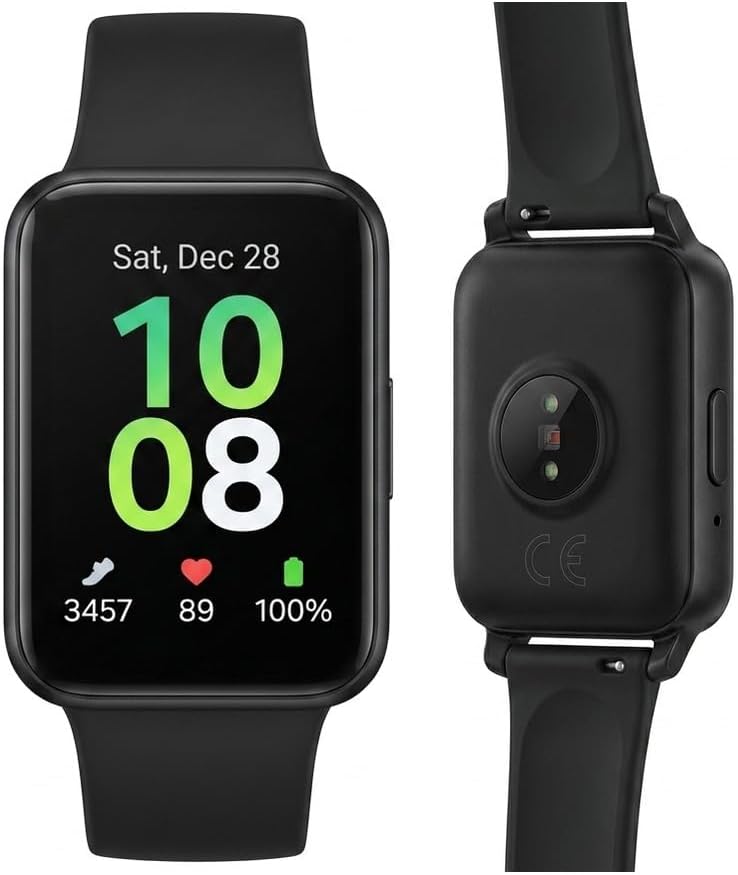
Fitbit Charge 6: Composite Scores and a Subscription Gate
SAMSUNG
$41.99
In stock on Amazon
Check price on AmazonFitbit takes a different approach. Google Fitbit’s Charge 6 product overview confirms it captures a nightly HRV reading, but the default experience surfaces that data primarily through two abstracted metrics: Daily Readiness Score (a 1–100 composite that weighs HRV against activity and sleep data) and HRV balance, which compares your reading against your personal range. The raw ms HRV figure is accessible in the Fitbit app — TechRadar’s Fitbit Charge 6 review notes it appears in the Health Metrics tile — but Fitbit’s product design clearly nudges users toward the composite scores rather than the underlying number. Accessing the full HRV history graph requires a Fitbit Premium subscription, which Google Fitbit’s current subscription documentation lists at approximately $10 per month or $80 per year. That’s the first fork in the decision tree.
What Practitioners Actually Need from HRV Data
Garmin
$149.99
In stock on Amazon
Check price on AmazonIf you’re using HRV data to make real training decisions — adjusting intensity blocks, flagging overreaching, or building a longitudinal picture you could hand to a sports physician — three things matter most: consistency of measurement timing, access to the raw number in ms, and trend visibility over weeks and months.
Consistency: Both devices measure overnight, which is the methodologically sound approach. Wareable’s HRV tracking explainer reinforces that overnight passive measurement reduces motion artifact and cortisol variability compared to spot-checks during the day. Garmin’s five-day rolling average further smooths out single-night outliers. Fitbit’s Daily Readiness Score is a composite that can shift based on activity and sleep metrics independently of HRV, which means a low readiness score doesn’t always isolate HRV as the driver — you’d need to dig into the Health Metrics tile to confirm.
Raw ms access: Garmin surfaces the ms figure prominently and without a paywall. For practitioners who want to cross-reference against published HRV normative ranges, having the raw number in hand is the only way to contextualize your data against external benchmarks. Shaffer and Ginsberg’s 2017 review “An Overview of Heart Rate Variability Metrics and Norms,” available via ncbi.nlm.nih.gov, places typical resting HRV for healthy adults roughly between 20 and 100 ms, with significant individual variation by age and fitness level. Fitbit’s composite score is harder to map to published literature.
Trend visibility: Seeing your HRV baseline drift downward over a four-week training block — or recover post-illness — is where the value compounds. Garmin Connect’s full trend history is free. For Fitbit users who want that same longitudinal view, the Premium subscription is required. PCMag’s Vívoactive 5 review notes that Garmin Connect’s no-cost data depth is particularly compelling for anyone actively optimizing recovery. If you only pull up the Fitbit app occasionally and the composite scores meet your needs, that’s fine — but if you’re actively optimizing, paying $80 per year to unlock what Garmin provides free is a real cost to weigh.
One important caveat for the clinical-adjacent reader: Neither device is FDA-cleared for arrhythmia detection or clinical HRV diagnosis. Neither produces a data export that a cardiologist can formally interpret in a clinical context. If you’re managing documented atrial fibrillation or need physician-reviewable recordings, a dedicated FDA-cleared cardiac recorder operates in an entirely different category. The Vívoactive 5 and Charge 6 are performance and wellness tools, not clinical instruments.
The Numbers: Cost, Data Access, and Specification Comparison
| Feature | Garmin Vívoactive 5 | Fitbit Charge 6 |
|---|---|---|
| Street price (May 2026) | ~$250 | ~$160 |
| HRV metric reported | ms value + 5-day rolling avg Garmin — $149.99 | ms value + composite score SAMSUNG — $41.99 |
| Raw ms visible free? | Yes Garmin — $149.99 | Yes (Health Metrics tile) SAMSUNG — $41.99 |
| Full HRV history free? | Yes (Garmin Connect) Garmin — $149.99 | No — Premium required SAMSUNG — $41.99 |
| Premium subscription cost | $0 Garmin — $149.99 | ~$10/mo / ~$80/yr SAMSUNG — $41.99 |
| Chest-strap compatibility | Yes (ANT+/Bluetooth) Garmin — $149.99 | No native third-party HR strap SAMSUNG — $41.99 |
| Battery life (manufacturer-rated) | Up to 11 days Garmin — $149.99 | Up to 7 days SAMSUNG — $41.99 |
| GPS | Built-in onboard Garmin — $149.99 | Connected GPS (phone-dependent) SAMSUNG — $41.99 |
| FDA-cleared ECG | No Garmin — $149.99 | No SAMSUNG — $41.99 |
Three-year total cost of ownership illustration:
- Vívoactive 5 standalone:
$250 + $0 subscription = **$250** - Charge 6 with Premium:
$160 + ($80 × 3 years) = **$400**
The Charge 6’s lower entry price flips within two years if you want the full data history that makes HRV tracking genuinely useful over time.
Ecosystem Fit and the Chest-Strap Question
For practitioners who already own or are considering a chest strap — say, a Polar H10 for higher-accuracy HRV spot-checks during warm-ups or structured workouts — the Vívoactive 5 is the straightforward choice. According to Garmin’s published Vívoactive 5 specification sheet, the device supports both ANT+ and Bluetooth HR broadcast, meaning it can receive a live HR signal from a Polar H10 during exercise and record it alongside GPS and pace data. The Charge 6 does not natively pair with third-party chest straps; it relies on its own PPG sensor exclusively.
This matters for a specific use case: if you want the best of both worlds — convenient overnight wrist-based HRV trending plus occasional high-accuracy chest-strap sessions during VO2-max intervals — Garmin’s ecosystem supports that hybrid stack cleanly. Fitbit’s does not.
The Vívoactive 5’s GPS is also fully onboard, with no phone required during exercise. The Charge 6’s GPS situation is more nuanced: TechRadar’s Fitbit Charge 6 review notes that the device relies primarily on a connected phone’s GPS chip, with onboard GPS available as backup, and that GPS accuracy was “adequate for casual tracking but lagged behind dedicated running watches” in real-world testing. Google Fitbit’s Charge 6 product overview confirms the Connected GPS architecture. For runners and cyclists building a training log they intend to analyze, that distinction affects data quality.
The Decision Rule
Here’s where this lands in plain terms:
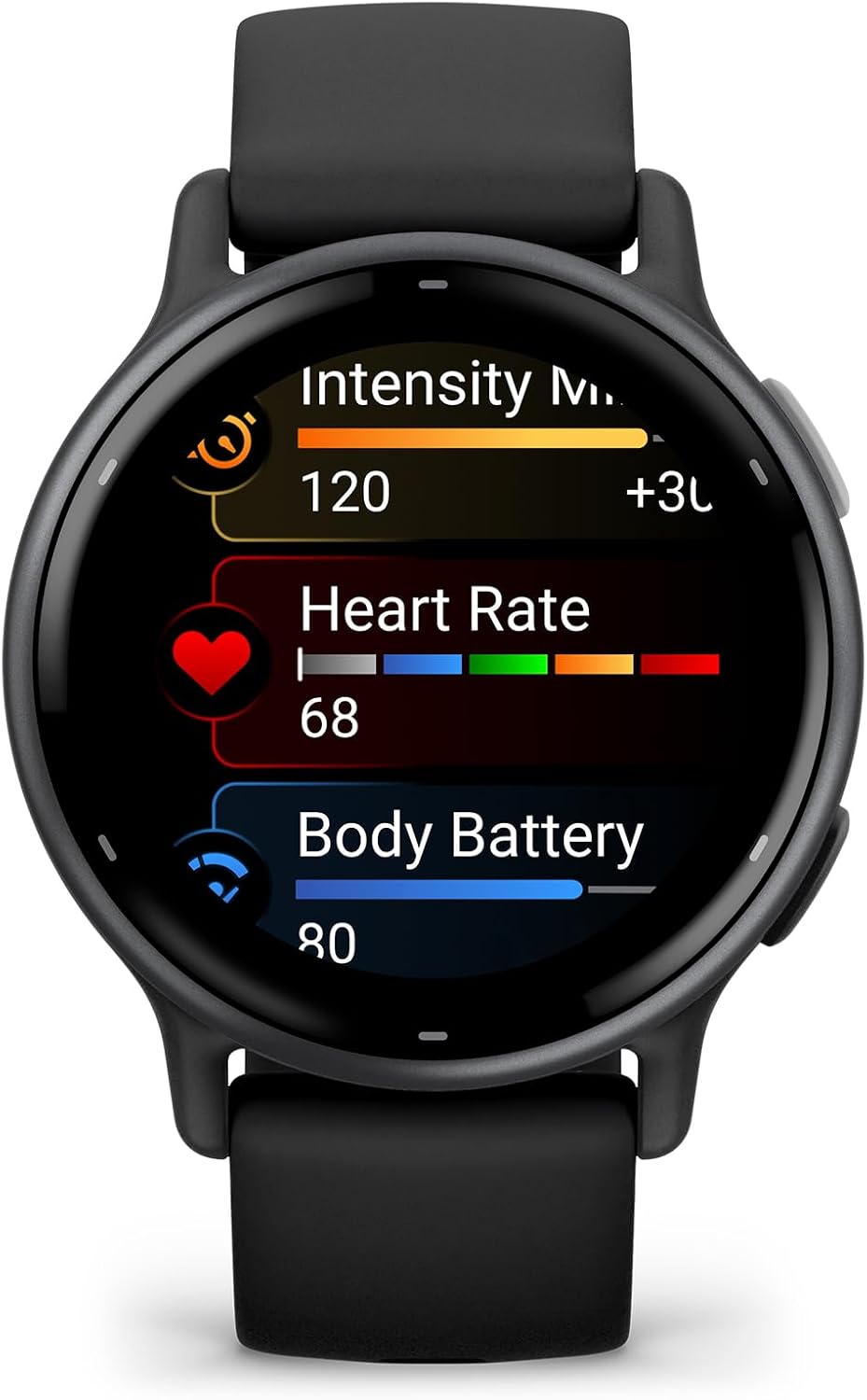
Who Should Choose the Garmin Vívoactive 5
Garmin
$149.99
In stock on Amazon
Check price on AmazonChoose the Vívoactive 5 if you want raw ms HRV data and full trend history without paying a subscription, if you already own or plan to add a Polar H10 or similar chest strap to your monitoring stack, if you run or cycle and need reliable onboard GPS, or if you’re building a longitudinal HRV baseline you intend to act on — or discuss with a coach or sports physician. The free depth of Garmin Connect, noted by PCMag’s Vívoactive 5 review as exceptional for this price tier, makes it the stronger platform for anyone treating HRV as a serious training and recovery input rather than a dashboard decoration.
Who Should Choose the Fitbit Charge 6
SAMSUNG
$41.99
In stock on Amazon
Check price on AmazonChoose the Charge 6 if your primary interest is general wellness awareness and the abstracted Daily Readiness Score fits how you actually review data day to day. It also makes sense if you’re embedded in the Google ecosystem — Android phones, Google Health Connect integration — and value that continuity. If budget entry point matters and you’re not planning to dig into raw HRV trends regularly, the $90 savings at purchase is real. Just account for the Premium subscription if you eventually want full historical access; as Google Fitbit’s subscription documentation confirms, that cost adds up over time.
Who Should Look Beyond Both Devices
Garmin
$189.99
In stock on Amazon
Check price on AmazonIf you’re actively managing arrhythmia, atrial fibrillation, or another documented cardiac condition and need physician-reviewable output, neither the Vívoactive 5 nor the Charge 6 belongs at the center of your monitoring stack. Both are adjunct wellness tools. Your primary device should be an FDA-cleared cardiac recorder; these trackers can add useful daily trend context alongside that foundation, but they cannot replace it. Mayo Clinic’s overview of heart rate variability reinforces that clinical HRV interpretation belongs in a medical context, distinct from consumer wellness tracking.
The Vívoactive 5 costs $90 more at purchase but saves approximately $80 per year versus Charge 6 plus Premium. By year two, the Garmin is the better value and the richer data platform — a combination that’s difficult to argue with for anyone who takes recovery monitoring seriously.